Why the Universe exist at all?
- -
- May 10
- 2 min read
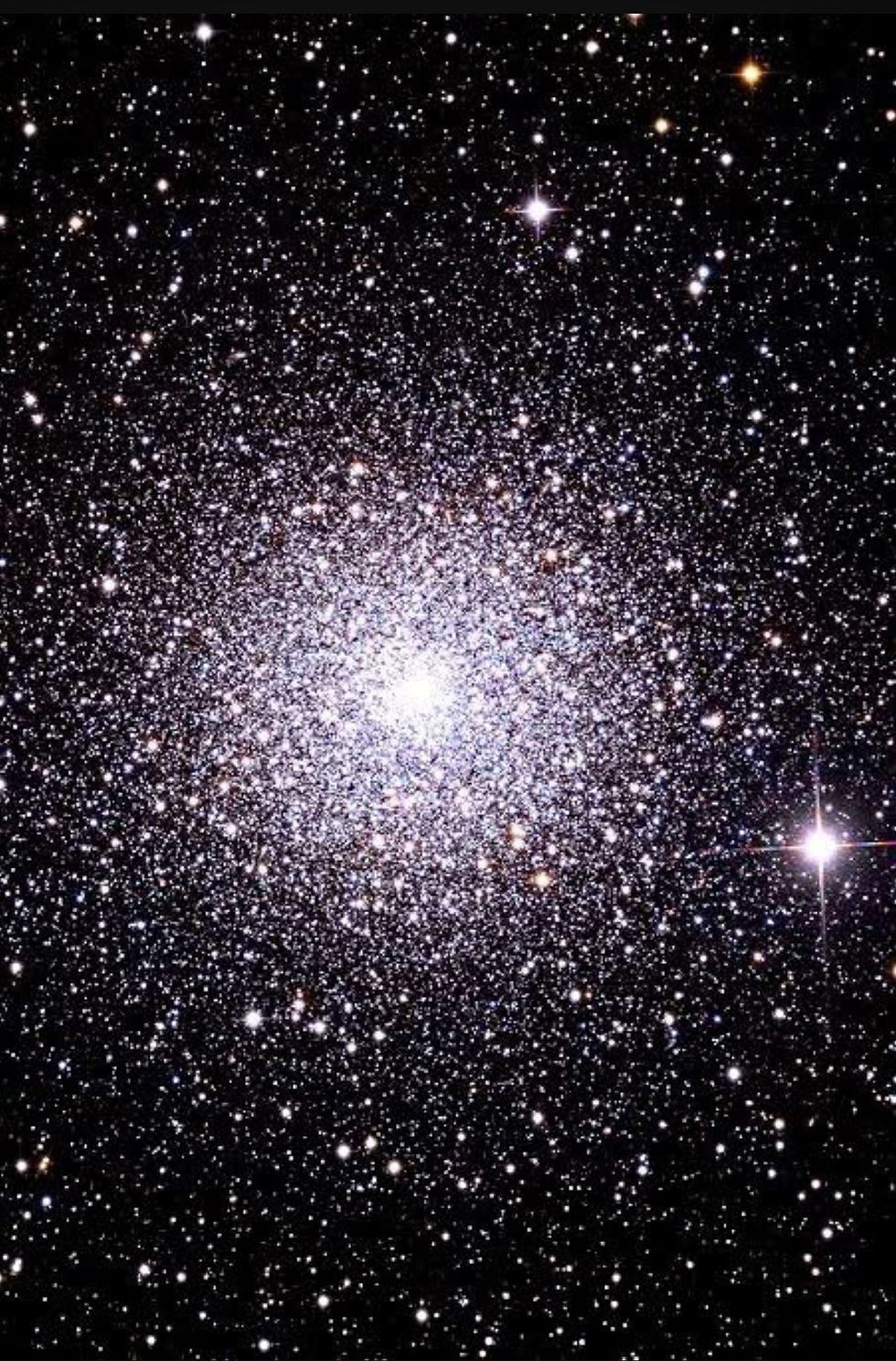
That's one of the deepest and most profound questions you can ask. Physicists and philosophers don't have a final answer, but here's how they approach it.
The short answer is: We don't know yet, but we have several compelling speculative ideas.
Here are the main scientific and philosophical perspectives.
1. The "Something vs. Nothing" Problem
Our intuition says "nothing" (no space, time, matter) is simpler and more natural than "something." But physics suggests true "nothing" may be unstable or even impossible. Quantum mechanics shows that even a perfect vacuum teems with fleeting particle-antiparticle pairs. The universe might be a vastly scaled-up version of this quantum fluctuation.
2. Key Scientific Hypotheses
· Quantum Gravity / Tunneling from Nothing: In this idea, time itself began with the Big Bang. Before that, there was no "before." The universe emerged from a quantum vacuum via tunneling, requiring no prior cause—just the laws of quantum mechanics.
· The Cyclic Universe: The universe undergoes endless Big Bangs and Big Crunches. There was no first creation, just an eternal cycle of expansion and contraction.
· The Multiverse / Eternal Inflation: Our universe is one bubble among countless others in a vast, eternally inflating quantum foam. Most bubbles collapse, but some expand. Ours exists as a rare, stable bubble where conditions allow stars, planets, and life.
· Mathematical Existence: Proposed by physicist Max Tegmark, this radical idea says every mathematically consistent structure physically exists. Our universe is just one self-consistent mathematical reality among many. Its "existence" is as natural as the fact that 2+2=4.
3. A Key Misconception to Avoid
Don't ask, "What caused the universe?" Because cause and effect require time. If time began with the universe, there was no "before" for a cause to exist in. The universe could be uncaused, or its cause could be a timeless, non-physical entity.
4. The Anthropic Perspective
Ultimately, we can't treat this as a neutral observation. If the universe didn't exist, we wouldn't be here to ask why. So the fact that we find ourselves in a universe that does exist is inevitable from our perspective—no further explanation is strictly necessary, though it's still deeply unsatisfying philosophically.
Bottom line: We have interesting mathematical and quantum ideas, but none is proven. The fact that physics leads us to the very edge of "why there's anything at all" suggests we may be hitting the limits of science. Beyond that, the question enters the realm of philosophy, theology, or pure wonder.
For now, the most honest scientific answer is: "We don't know yet, but the universe has no self-destruct button—it's allowed to exist.”


Comments